The alarm goes off at 6:00 AM. That is the first mistake. The second mistake is putting your feet on the floor. If you played ninety minutes on a frozen Saturday afternoon in November, you know the feeling. Your ankles don't want to hinge. Your knees feel like they have been filled with gravel. You have to walk down the stairs backward because your quads are screaming.
I spent nine years doing this. I’d play a game in the lower tiers of the Scottish leagues on a Saturday, then show up to my office job on Monday. You don't get the luxury of a post-match massage from a club physio who has a master's degree in sports science. You get a cold shower, a shift on your feet, and the quiet realization that you’re doing real damage.
We need to talk about the culture of "playing through pain." Because quite frankly, it’s a lie that ruins guys.
The Myth of "Toughness"
In the dressing room, the loudest voices always talk about being a warrior. They talk about "shaking it off" and "digging deep." It sounds good in a team talk. It looks good in a highlight reel. But it’s an empty sentiment.
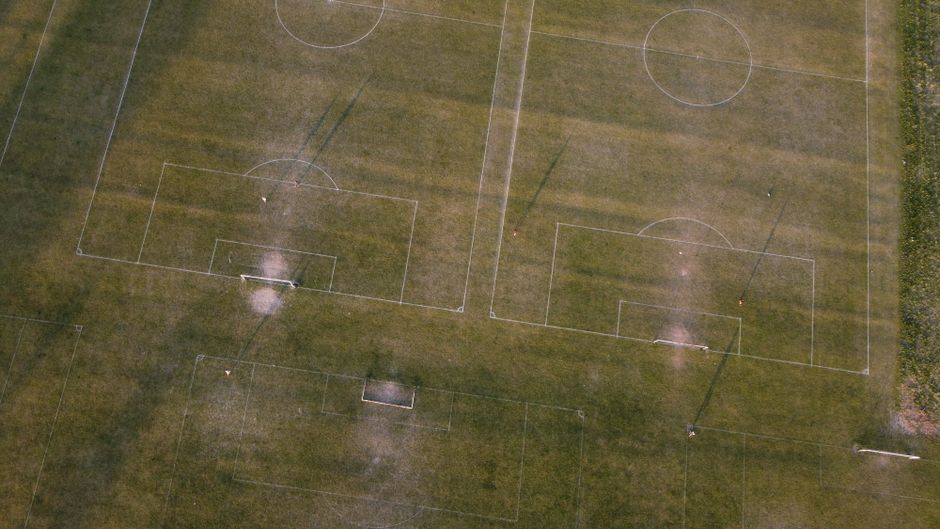
There is no glory in rupturing an Achilles because you were too proud to ask for a sub in the 70th minute. Nobody is giving you a medal for limping through a Tuesday night training session. When you are a part-time player, you have a life to live outside the white lines. You have to drive a car. You have to stand at a desk. You have to play with your kids.
If you don't know the difference between a minor niggle and an overuse injury, you are going to lose the ability to do those things properly later in life. It’s that simple.

Part-Time Recovery: The Reality Check
Football at the top level is a science. If a player feels a tightness in their hamstring, they’re in a hyperbaric chamber before dinner. In the lower leagues? We have a bag of frozen peas and maybe a foam roller that’s been sitting in a damp boot bag for three years.
We are https://varimail.com/articles/the-monday-morning-truth-why-lazy-usually-means-broken/ playing professional-level intensity with amateur-level recovery resources. That is the fundamental gap that everyone ignores. You cannot train at 100% capacity and recover with 20% of the tools and expect to survive.
Resource Comparison Table
Aspect Top-Tier Pro Part-Time Player Physio Access Daily/On-demand Once a week/None Recovery Tools Cryotherapy/Massage Frozen bag of peas Workload Controlled/Monitored Whatever the gaffer demands Surface Perfectly manicured grass "Concrete with a wig"Cumulative Strain: The Silent Killer
It’s rarely the one big tackle that finishes you. It’s the constant, grinding repetition. It’s the way your calf tightens up every Wednesday night on the astroturf. It’s the way you ignore that stabbing sensation in your hip because you don't want to lose your spot in the starting XI.
Overuse injuries don't announce themselves with a pop. They creep up. They start as a minor niggle that you convince yourself is just "football stuff." Then, it becomes a chronic ache that dictates how you walk. Finally, it becomes a structural failure. By the time you realize it's an injury, the tissue is already compromised.
The Cleveland Clinic notes that overuse injuries are often the result of repetitive stress without adequate rest. In our world, "adequate rest" is a foreign concept. We train Tuesday and Thursday, play Saturday, and work a 40-hour week in between. Your body isn't a machine; it’s a biological system with a breaking point.
The Surface: Playing on "Concrete with a Wig"
If you play in the Scottish lower leagues, you’ve experienced the terror of the modern artificial pitch. It’s supposed to be an improvement over the mud-bath pitches of the 90s, but let’s be honest: it’s unforgiving. It doesn't give. Every turn, every sharp sprint, every heavy landing sends a shockwave straight up through your shins and into your knees.
When you combine hard surfaces with the physical duels that characterize our game, you have a recipe for disaster. You’re bracing for impact on a surface that won't dissipate the energy. Something has to give. Usually, it’s your cartilage or your ligaments.
How to Know When to Step Back
I learned the hard way. I tried to play through a Grade 1 tear in my calf for a month. I ended up missing half a season because I turned a two-week recovery into a three-month catastrophe. Don't be that guy. If you want more tips on navigating the sport's demands, check out our general category for more player-focused insights.
Follow these steps to avoid the downward spiral:
The 48-Hour Rule: If the pain isn't getting better after 48 hours of rest, it’s not a "niggle." It’s a medical issue. Listen to the Joint, Not the Ego: If you feel like you have to pop an anti-inflammatory just to get through a training session, you shouldn't be training. Identify the Pattern: If your ankle hurts every time you play on the 3G pitch but feels fine on grass, that is not "just a niggle." That is your body telling you the surface is causing repetitive trauma. Be Honest with the Gaffer: Tell them you need a week off. If they don't value your long-term health, they don't value you.Final Thoughts
Playing through pain is a narrative sold by people who don't have to carry your medical bills. It’s the kind of toughness that sounds great in a pub, but it feels miserable when you’re 45 and can’t climb the stairs without a wince. Treat your body with the respect that a part-time athlete deserves. You have a job to go to on Monday morning. Make sure you can walk into it.